
© Alessandro Toscano
IV EDITION
01 august - 12 october 2025
San Lucido (CS)
Radici comuni: luoghi
(Shared roots: places)
For the 4th edition of the Fotografia Calabria Festival, the theme "Shared roots: places" invites us to explore how the places we inhabit and traverse are an extension of the roots that connect us, not only to the past but also to our collective and personal identity. In this way, places become points of intersection between our individual history and our collective history, guardians of both visible and invisible bonds, speaking of belonging, evolution, and change.
On one hand, there are the physical and geographical places – cities, landscapes, buildings, small spaces, abandoned places – that are so familiar and present in our lives that they urge us to document, celebrate, and crystallize them, or, conversely, to take them for granted, only to rediscover them unexpectedly. On the other hand, there are the preconceived ideas and clichés we associate with certain places, influencing how we perceive, experience, or ignore them. Moreover, there are imaginary places: spaces that do not belong to the physical world but exist in the minds of those who create them, reflecting shared ideas and visions.
Every landscape, every building, every urban or rural space – even the most mundane or forgotten – is rooted in a memory that defines it. Through photography, this visual journey tells the story of these common roots: the deep connection that binds us to the places we inhabit, as well as those we have lost, removed, or that exist only in our dreams and perceptions.
With "Shared roots: places," the festival invites us to look beyond the surface, to explore the complexity of the places around us, and to reflect on how these, in their continuous transformation, reflect who we are and what we are becoming.
Anna Catalano
Artistic Director
The exhibitions

Lys Arango
The river ran black
“The River Ran Black” is a long-term documentary project exploring the profound transformation of Asturias, a region in northern Spain once synonymous with coal mining, as it faces the challenges of energy transition. Through a deeply personal lens, the project examines the human, cultural, and environmental impacts of the decline of the mining industry, while documenting innovative progress toward renewable energy and environmental restoration.

Ciro Battiloro
Silence is a gift
Rione Sanità (Naples), Santa Lucia (Cosenza), Torre del Greco. There are places in southern Italy that bear the scars of incurable wounds on their walls and on the flesh of their inhabitants. Those wounds hold the historical memory and the true face of human beings. Silence is a Gift speaks of love and loneliness, life and death, pain and joy, but above all of intimacy. Intimacy is something extraordinary; it reveals the uniqueness of every human life.

Claudia Fuggetti
Metamorphosis
“Metamorphosis” represents the historical period in which we live, a phase of transition and change that involves not only humanity, but above all nature. To quote the ecological philosopher David Abram: "I think it is useful to approach the issue of the ecological crisis as a crisis of perception, a crisis in the way we experience, through our bodies, the sounds, smells, and world around us.

Paul Gambin
Parlami d’amore
In “Parlami d'Amore,” the artist embarks on a deeply personal odyssey, exploring the themes of home, love, and family. The project serves as a poignant exploration, weaving together different elements to illuminate the complexity of her experiences. At its core, “Parlami d'Amore” emerges as a narrative tapestry, weaving together images that capture the artist's ancestral home nestled in the heart of Tuscany, with paintings from the Renaissance period in Florence and sound, musical, and lyrical elements from the artist's childhood.

Jung Ui Lee
Urban Tattoo
(This is beautiful)
The facades of buildings are constantly changing. Residents who cannot afford the rent increase are forced to leave, and new tenants take their place. With each transition, a new sign appears. Although this phenomenon is not entirely due to COVID-19, the pandemic has certainly accelerated the turnover. If you revisit the locations of my photographs, you will immediately notice the changes: some signs have disappeared, while others have replaced them. And the cycle continues.

Kazuaki Koseki
Summer fairies
For my “Summer Fairies” series, I explore the relationship between ecology and the natural environment of the “Himebotaru” that flies in the summer night forest. The sight of fireflies, a species endemic to Japan, flying in the summer forest is like a scene in which the stars in the sky continue to shine. That sight is so fascinating that it makes you forget the sense of wonder that the nighttime forest evokes. It is the glow of life, which lasts only 10 days in summer.
Alessandro Mallamaci
A beautiful place
Alessandro Mallamaci offers us two points of reference to help us understand his narrative. The first is geographical: "The valley of the Sant'Agata river finds refuge among the red earth of the Aspromonte mountains, in the province of Reggio Calabria, and flows towards the sea, until it plunges into the Strait of Messina. The name of the river originates from the Greek aghatè, which is linked to concepts such as beauty, goodness, and nobility, as if the travelers of the Magna Graecia period had been enchanted by this place.“ The second is emotional, a sort of afterword that aims to clarify the title of his work: ”This is my landscape. I cannot help but love it. It is a beautiful place.".

Chiara Negrello
Caring for our past
“Caring for our past” tells the story of the community of Ukrainian caregivers in Italy and what it means to care for a stranger while the people you love most are living in a war zone. However, this project also involves my family history and begins within the walls of my home, before Russia invaded Ukraine. In 2020, my grandmother fell ill with COVID-19 and was forced to spend three months in hospital, which left her so debilitated that she needed assistance once she returned home.

Maja Nydal Eriksen
Awaiting the bridge
Quemoy means “Golden Gate” in Chinese. It is a small island controlled by Taiwan, but so close to mainland China that you can see its coastline. Historically, Quemoy has struggled to maintain a delicate balance of power between Taiwan, the United States, and China. For years, the island has been a Taiwanese defense outpost, and the military is still present on the island. Everywhere there are signs of a turbulent past between the two countries that once fought each other in a civil war.

Sofia Pagliaro e Gaia Tognoni
Connessioni
“Connessioni” is the result of a participatory photography workshop at the Centro Antiviolenza Donne al Centro in Aprilia, curated by Simona Ghizzoni and held by two young artists: Sofia Pagliaro and Gaia Tognoni. The workshop was created in 2024 at the request of a group of women who, having completed their journey out of violence, wanted to continue their mutual support group experience through photography. Photography, by its very nature, has a deep connection with memory and remembrance, but at the same time it can be a tool for reflection and reconstruction of one's identity.

Mykhaylo Palinchak
Highlight
Since the start of Russia's large-scale invasion of Ukraine on February 24, 2022, Russian military forces and authorities have committed numerous war crimes throughout Ukraine, in the form of deliberate attacks on civilian targets, abductions, illegal capture and torture of civilians, torture of prisoners of war, massacres of civilians, torture and rape of women and children, and indiscriminate attacks in densely populated areas.

Melissa Peritore
Sementeryo
The photographic project “Sementeryo” reveals a profound intersection between life and death in the evocative setting of two cemeteries in Metro Manila (Philippines): Manila North and South Cemetery.
Melissa Peritore's photographs invite us to consider the cemetery not only as a place of mourning, but also as a testament to resilience and adaptation. Thus becoming a “place” - a locus of intertwined stories - where life persists in unexpected forms. They highlight the paradox of a community that flourishes in the shadow of mortality and invites us to reflect on the human capacity to adapt, even in the most unusual places.

Andrea Salvucci
I licutiani
In the picturesque little port of San Giovanni Li Cuti, nestled in the center of the city of Catania, a group of devoted bathers gather every day to enjoy the sea and its benefits. They are men and women of different ages, some now retired, others who lost their jobs some time ago or who have always lived on the margins of society, and still others who take advantage of their lunch break to go for a swim, a sort of ritual that takes place in every season of the year as an antidote to life's adversities.

Hasham Shakeri
Cast out of heaven
The series “Cast Out of Heaven” by Iranian photographer Hashem Shakeri explores the urban developments that exist as a network of satellite towns around the Iranian capital, Tehran. Some might call these areas ghost towns, others see them as examples of a broken promise of paradise. The residents of these places live in a state of near exile due to the lack of infrastructure necessary to bring a city to life.

Marie Tomanova
It was once my universe
John Berger wrote: “To emigrate is always to dismantle the center of the world, and then to enter a lost and disoriented world made up of fragments.” Like many others, emigrating to the United States was the most significant decision of Marie Tomanova's life. The idea of an affirmative space, particularly around the concept of belonging, is fundamental to understanding Tomanova's work. Dislocation, place, community, self, and memory are the main themes of her work. “It Was Once My Universe” (2019) was created during Tomanova's first return home after eight years living in the United States.
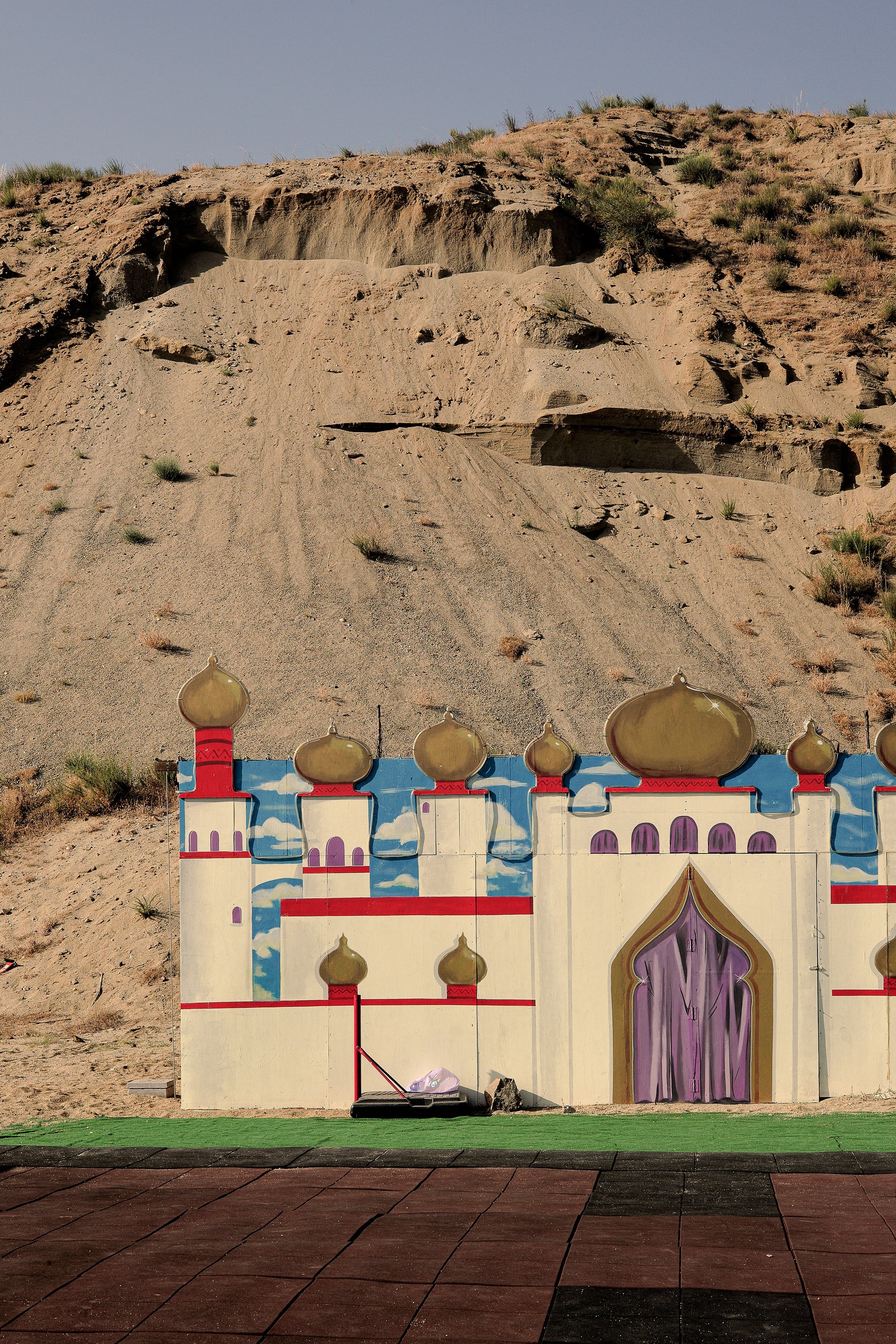
Alessandro Toscano
Overtourism
The project explores the phenomenon of mass tourism in some of Italy's major art cities. Through a process of digital processing, these images show us the relationship between historical and architectural identity and the dynamics of global tourism. This changing and continuous flow of passers-by constitutes a tourism demographic that alters the perception and morphology of these places and prompts reflection on their meaning and role in our society.
Fotografia Calabria
Festival Award 2025
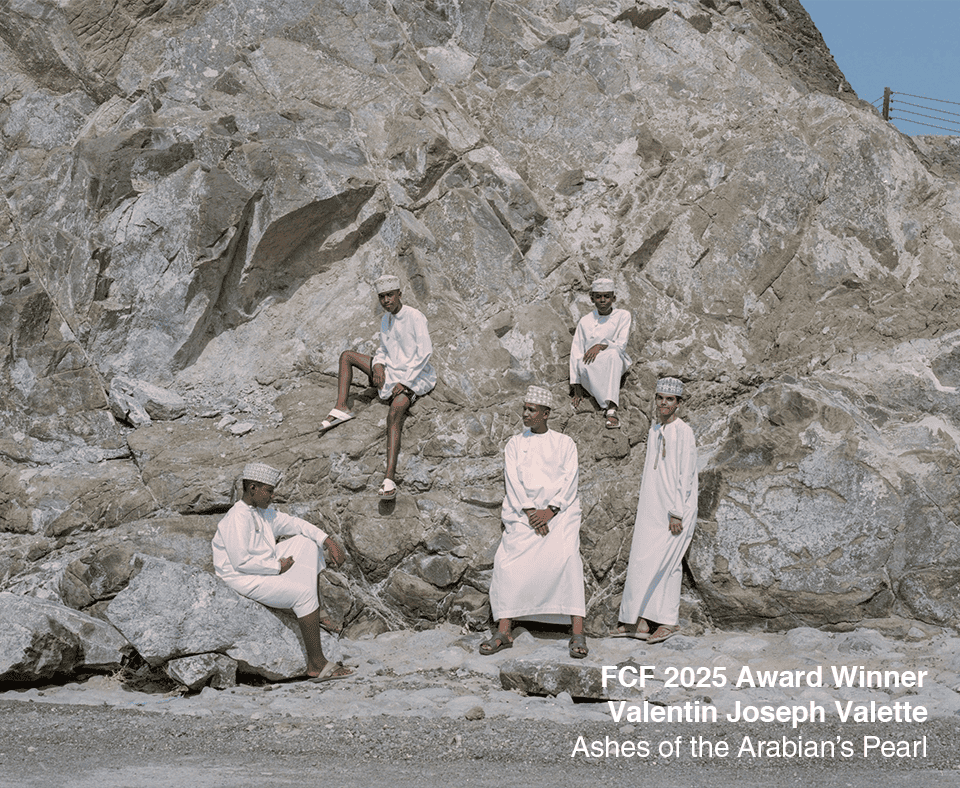
French of Algerian origin. Author-photographer, PhD student in visual anthropology. Lives between North Africa, the Gulf countries, and France. Guided by both my photographic practice and my studies in humanities and social sciences, I explore photography as a research tool. This project explores a period of interconnection, a chrysalis of monarchical transition, with the pressing need for economic diversification as oil and gas resources are depleted. From 2020 to 2023, this documentary project was born out of a desire to closely observe the dynamics of economic development and the individual future of this Gulf monarchy. In this spirit, Ashes of the Arabian's Pearl cultivates a metaphorical dialogue between two distinct demographics: those in positions of employment and those who serve in such roles.
How to get there
-
San Lucido is easily reachable by car via the A2 motorway (Autostrada del Mediterraneo). Recommended exit if you are coming from the south via A2/E 45: take the Falerna exit and continue on SS 18. If you are coming from the north, follow A1/E 45 towards Quattromiglia.
-
San Lucido has its own train station. You can take a train to the Paola station (about 10 km away), which is well-connected with major Italian cities. From Paola, you can take a regional train or a taxi to reach San Lucido.
-
Several bus services connect major cities in Calabria with San Lucido. Check local bus companies for schedules and fares. Some options include Autolinee Federico and IAS Autolinee.
-
The nearest airport is Lamezia Terme Airport (SUF), about 60 km from San Lucido. From the airport, you can rent a car, take a taxi, or use bus services to reach San Lucido.
Festival staff is available to assist you with any needs, so do not hesitate to contact us: info@fotografiacalabriafestival.it
Where to stay




© Andrea Salvucci