Alessandro Truffa

BOJA FAUSS
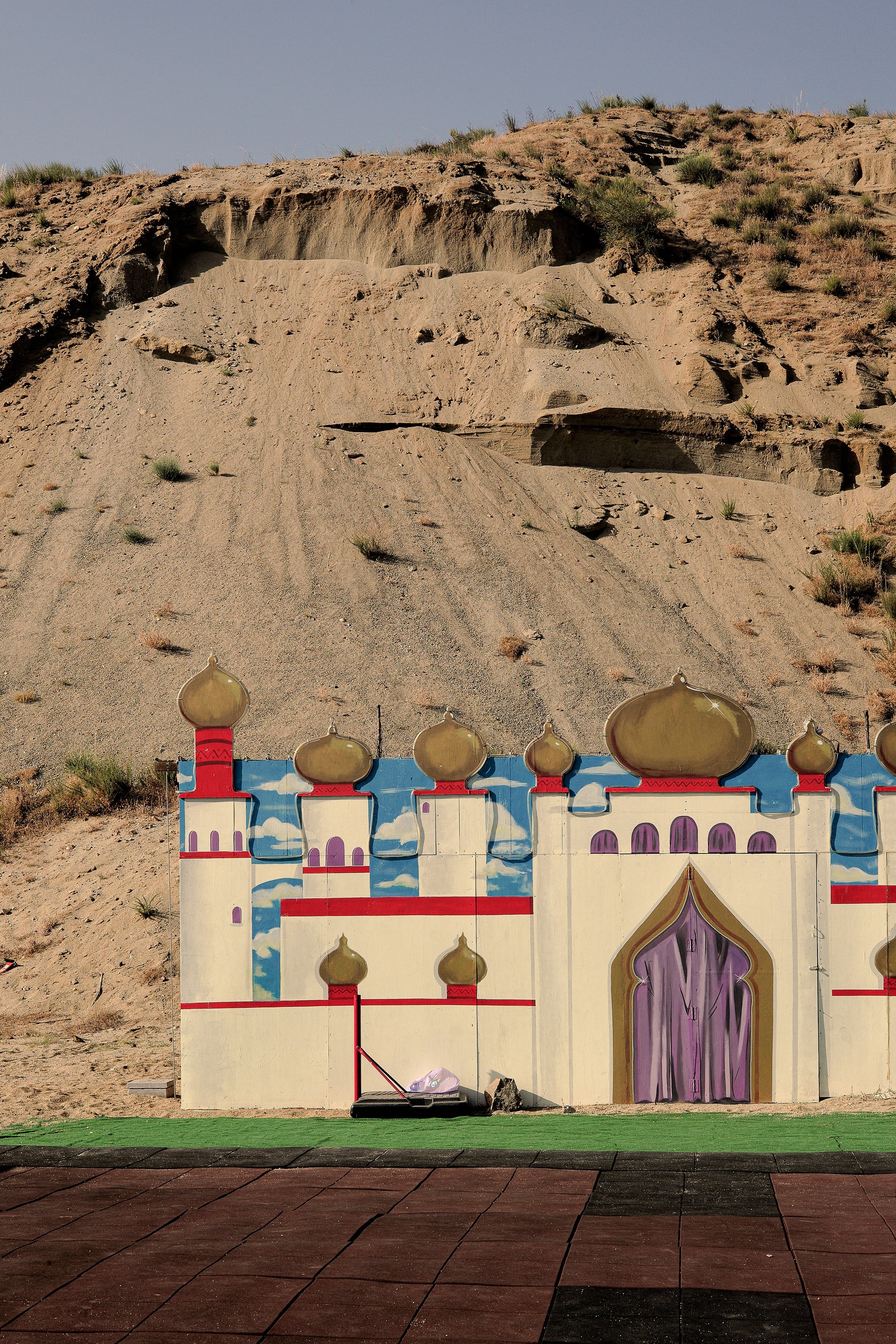
Boja Fauss addresses how the violence of historical events from the past settles into a dense network of cultural and symbolic elements, seemingly hidden beneath the veil of temporal stratification. The work traces judicial documents, archives, and museum spaces, as well as urban legends and news events connected to the city of Turin, bringing these elements back to the surface like dormant will-o’-the-wisps. The resulting visual narrative unfolds as a journey of memory archaeology, attempting to reveal how the historical trauma caused by public rituals of Justice has taken root in dialect language, popular culture, and the city’s museum, architectural, and cultural production. Starting from the legend that sliced sandwich bread (pancarrè) was invented by Turin’s bakers as an act of civil disobedience to cast a form of the evil eye against the executioner, the resulting book object conceals the visual narrative within double-page spreads depicting soft slices of this food. The esoteric nature of pancarrè engages with the playful dimension of the final book object, whose editorial choices invite the reader to perform a kind of exorcism in order to reopen a deep mnemonic wound, while simultaneously asking them to confront the meaning of this act of removal.
At 7:37 on 4 March 1947, took place in Turin the last execution in Italian judicial history against the perpetrators of the Villarbasse massacre. Transferred to Le Nuove prison, despite the request for an appeal to the Cassation, the three prisoners were in any case convicted due to the strong impact that the news story had generated on public opinion. They were executed in a shooting range by a firing squad formed by a group of local policemen. Thus ended one of the most heinous crimes of the immediate post-war period and, at the same time, a key event in the history of Italian criminal law, which remained famous as the last common crime punished with the application of the death penalty. About a century earlier in the same place the legend says that a form of rudeness reserved by the people to the executioner was that the bakers handed him the bread upside down to exercise contempt and evil eye. Prompted by the executioner’s repeated warnings and complaints, local officials issued a city ordinance formally banning the discriminatory practice. So it was that the bakers, to circumvent the law with a creative choice, invented a new device with magical and symbolic power, a type of brick-shaped bread: the sandwich. Same both below and above, the pancarréconcealed its message. In the impossibility of recognizing the cooking side, it could continue to be served upside down, thus exercising its silent power. The pancarré, today a soft ghost to feed on, would be born at the expense of its food value, to be used as an instrument of political dissent against a figure perceived as the embodiment of a system in which Justice was publicly ritualized and manifested itself as an instrument control. A heterogeneous mixture of elements is amalgamated in its dough: judicial news and popular history, literary writings and archival documents; echoes of a trauma settled in the collective memory, buthidden under a soft and reassuring surface.
Text by Alessandro Truffa
BIO
Photographer and visual artist based in Turin. His research focuses on themes related to relationships of care and ritual traditions, exploring possible connections between photographic language and different disciplinary fields such as natural sciences, semiotics, and anthropology. He has exhibited his work at Fotografia Europea and was a finalist for the Luigi Ghirri Prize. He is the winner of the Marco Bastianelli Prize for Best Photobook and of the Francesco Fabbri Prize in the Contemporary Photography category. He is the author of photobooks such as Fuoco contro Fuoco (2022), published by Giostre Edizioni, and BojaFauss (2023), published by Corraini Edizioni, which will be exhibited at the festival in the “Tradition” section.